Unpacking the Role of Push Notification Timing in Driving Real-Time Engagement Within Regulated Live Betting Applications
Skriven av Katja Coleman · 2026-10-06
Unpacking the Role of Push Notification Timing in Driving Real-Time Engagement Within Regulated Live Betting Applications
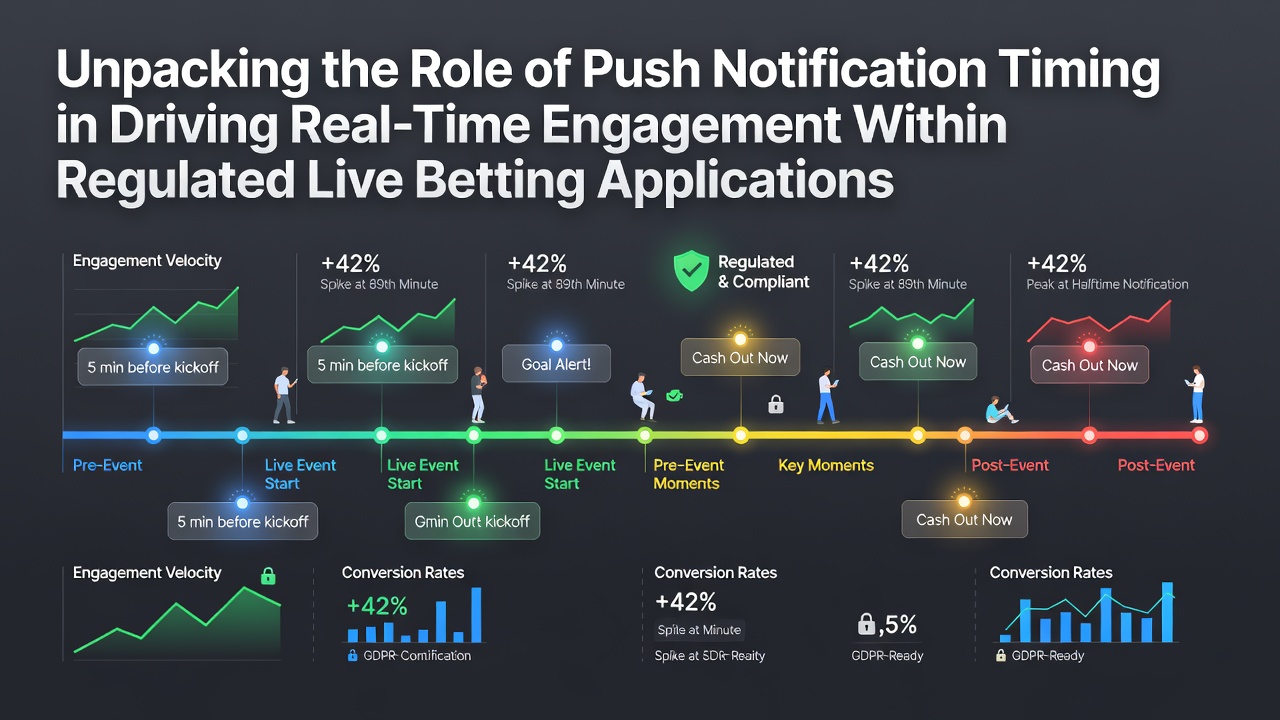
Push notifications serve as direct communication channels between regulated live betting applications and users, delivering alerts about odds changes, event starts, and personalized offers at precise moments. Timing plays a central part because operators must balance engagement goals with strict compliance rules that govern frequency and content across jurisdictions. Data from industry reports indicate that notifications sent within specific windows around live events correlate with higher session initiations and interaction rates, while poorly timed alerts often lead to opt-outs or reduced activity.
Core Mechanics of Notification Timing in Live Environments
Live betting platforms rely on real-time data feeds to trigger notifications at moments when user attention peaks, such as right before a key play in a sports match or immediately after a score update. Researchers have documented that alerts arriving 30 to 90 seconds before significant in-game developments produce measurable lifts in bet placement volumes compared to random intervals. Systems integrate with event APIs so that timing aligns with broadcast schedules and market volatility patterns, which helps maintain relevance without overwhelming device screens.
Operators segment audiences based on past behavior, device usage patterns, and time-zone data to refine delivery schedules. One analysis of aggregated platform metrics showed that users in evening hours respond more consistently to pre-match reminders sent 45 minutes ahead, whereas daytime sessions benefit from shorter lead times of 10 to 15 minutes. These adjustments account for varying attention spans across different betting categories like football, tennis, and basketball.
Regulatory Frameworks Shaping Delivery Windows
Regulated markets impose explicit limits on notification cadence and require opt-in mechanisms that record user consent timestamps. In several European jurisdictions, rules updated in late 2025 require operators to log exact delivery times and demonstrate that messages do not exceed three per active session. Similar standards in Canadian provinces and Australian states mandate cooling-off periods between alerts to prevent excessive contact during extended live events.
Compliance teams routinely audit timing logs against these requirements, which affects how algorithms prioritize certain triggers. Data released in October 2026 by regional oversight bodies highlighted that platforms adhering to 20-minute minimum intervals between notifications experienced lower complaint volumes while sustaining comparable engagement levels to less restricted environments. Such findings underscore the interplay between legal constraints and operational design choices.
Measured Effects on Real-Time User Engagement
Platform telemetry collected across multiple operators reveals that strategically timed notifications increase the likelihood of users opening the app during live windows by factors reported between 1.8 and 2.4 times baseline rates. Engagement metrics tracked include time spent viewing live odds, number of markets accessed, and completion of in-play bets. Studies tracking cohorts over multi-week periods found that timing aligned with broadcast commentary spikes produced the strongest retention signals, particularly when combined with contextual details like current score or remaining time.
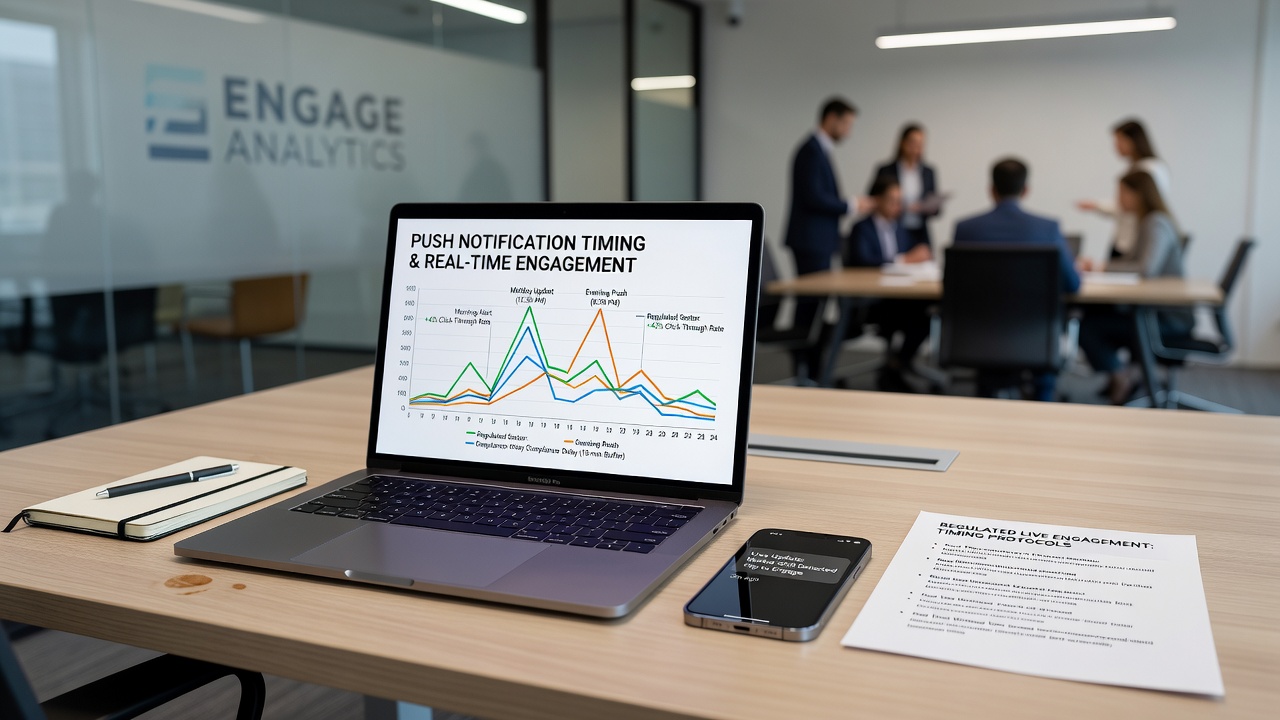
Yet the same datasets also indicate diminishing returns when notifications cluster too closely around multiple simultaneous events. Observers note that users who receive alerts for overlapping competitions often exhibit shorter session durations, suggesting a saturation threshold. Algorithms therefore incorporate event-density filters that suppress secondary messages once primary triggers have been sent within a defined timeframe.
Integration With Broader Platform Ecosystems
Push notification timing connects directly with verification protocols, payment gateways, and odds-update systems inside regulated applications. When a user completes identity checks, the system can schedule a confirmation notification at an optimal interval that coincides with upcoming live markets rather than sending it immediately. This approach leverages the same data infrastructure used for transaction monitoring, ensuring messages arrive when accounts are fully active and ready for betting activity.
Industry associations such as the European Gaming and Betting Association have published guidelines that encourage synchronization between notification engines and responsible gambling tools. These documents reference timing strategies that pause alerts during extended play sessions or after deposit limits are reached. Operators implementing such pauses report stable engagement figures alongside improved compliance scores in routine audits.
Future Adjustments Following 2026 Regulatory Updates
Reports issued in October 2026 by oversight agencies in multiple regions outlined new expectations for dynamic timing controls that respond to real-time user feedback signals. Platforms now test machine-learning models that adjust delivery based on click-through history and session length, while still respecting statutory frequency caps. Early results from pilot programs suggest these adaptive systems can maintain engagement parity with static schedules while reducing user-initiated unsubscribes.
Technical standards continue to evolve in tandem with device operating system changes that affect background delivery reliability. Developers therefore calibrate timing parameters to account for variations in push service latency across iOS and Android environments, ensuring consistent arrival windows regardless of network conditions.
Conclusion
Push notification timing functions as a core operational lever within regulated live betting applications, directly influencing how users interact with real-time markets. Evidence from platform analytics and regulatory reviews demonstrates that precise scheduling, when aligned with both event dynamics and compliance requirements, supports sustained engagement levels. As frameworks continue to incorporate findings from October 2026 assessments, operators refine their approaches to maintain this balance across diverse jurisdictions and user segments.