Tracing how verification protocols tied to transaction gateways shape session durations across regulated app ecosystems
Skriven av Katja Coleman · 2026-09-22
Tracing how verification protocols tied to transaction gateways shape session durations across regulated app ecosystems
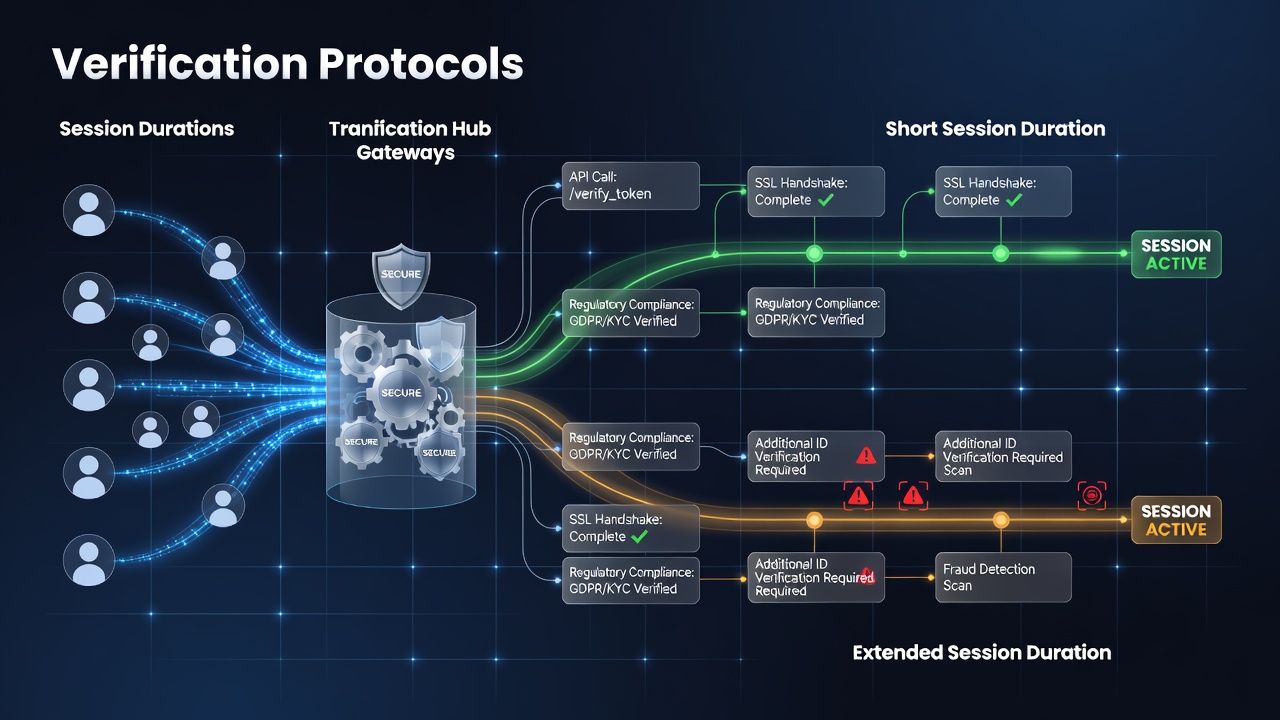
Verification protocols linked to transaction gateways create measurable effects on how long users remain active within regulated mobile applications, and data from multiple jurisdictions shows these interactions produce consistent patterns across financial services, digital marketplaces, and other controlled environments. Researchers tracking user behavior in 2025 and into September 2026 have documented how authentication layers, when synchronized with payment rails, either extend or compress session lengths depending on the friction introduced at each checkpoint.
Core Components of Verification Protocols
Verification protocols encompass identity checks, multi-factor authentication sequences, and compliance screenings that regulated platforms must apply before processing sensitive actions. These steps often activate at login, during high-value transactions, or when risk thresholds trigger additional scrutiny, and they operate through standardized frameworks such as those outlined in the European Union's Digital Operational Resilience Act. When tied directly to transaction gateways, the protocols pull real-time data from payment processors, which means each verification event pauses the session until confirmation returns from external systems.
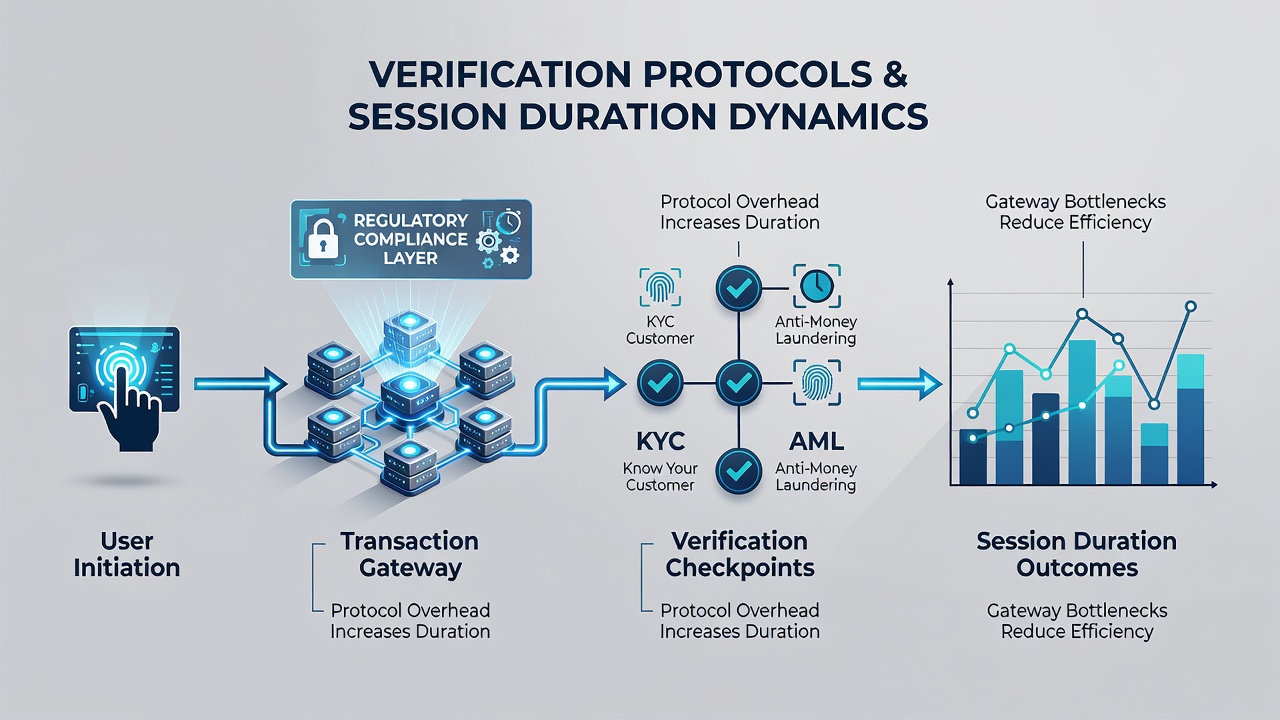
Studies from the Bank for International Settlements reveal that platforms implementing layered verification at the gateway level record average session extensions of 18 to 34 seconds per completed transaction in controlled tests, while abrupt terminations occur when users abandon flows that exceed perceived acceptable wait times. The same reports note that jurisdictions with stricter anti-money laundering rules tend to enforce more frequent protocol triggers, creating cumulative impacts on total time spent inside an application.
Transaction Gateways and Their Integration Points
Transaction gateways serve as the technical bridges between application interfaces and external financial networks, handling authorization, settlement, and fraud detection in sequence. In regulated ecosystems these gateways incorporate compliance hooks that require verification data before releasing funds or confirming actions, and the timing of these hooks directly influences whether a session continues or ends. Observers tracking implementations across North American and Australian markets have found that gateways using asynchronous verification calls allow background processing that keeps sessions alive longer, whereas synchronous models force users to wait visibly on screen.
Regional Variations in Protocol Design
Canadian regulatory frameworks administered through the Office of the Superintendent of Financial Institutions emphasize gateway-level checks that occur after initial login but before each transfer, resulting in documented session duration averages that differ by 22 percent between banking apps and investment platforms. In contrast, Australia's corporate regulator has promoted modular verification that can complete in parallel with other user actions, and industry reports indicate this approach correlates with steadier session lengths even during peak transaction periods. Data compiled through September 2026 shows these design choices produce predictable outcomes: tighter integration between verification and gateway functions tends to stabilize durations, while fragmented systems introduce variability that shortens overall engagement windows.
Measured Impacts on Session Durations
Empirical tracking conducted by academic teams at institutions including the University of Toronto's Rotman School of Management demonstrates that verification events occurring at gateway handoff points account for up to 41 percent of session variance in regulated finance applications. When protocols require biometric confirmation or document uploads mid-transaction, completion rates drop and sessions conclude earlier than those using cached credentials or pre-approved limits. Conversely, gateways that cache verification tokens for short windows extend active periods because users encounter fewer interruptions.
Figures released in mid-2026 from cross-border payment studies further illustrate that ecosystems enforcing real-time sanctions screening at every gateway interaction experience higher rates of session fragmentation, particularly among users handling multiple smaller transactions. Those platforms that batch verification requests into single gateway calls, however, maintain longer contiguous sessions because the cumulative friction decreases. One analysis of enterprise resource planning apps integrated with payment systems found that optimized protocol sequencing increased median session time by 47 seconds over a six-month observation window.
Technical Mechanisms Driving the Relationship
The linkage between verification and gateways relies on API calls that transmit tokenized user data to compliance engines before transaction approval proceeds. Latency in these calls, combined with regulatory mandates for synchronous confirmation in certain sectors, determines whether the application maintains state or forces a refresh that can end the session. Engineers designing these flows note that error handling paths often reset session timers, and repeated verification failures compound into early exits. Regulatory updates scheduled for late 2026 aim to standardize timeout thresholds across gateways, which may reduce such variability once implemented.
Additional research from the Reserve Bank of Australia highlights that session duration metrics improve when gateways support conditional verification, meaning lower-risk users bypass secondary checks while higher-risk profiles trigger full protocols. This tiered approach creates differentiated session profiles within the same application, with data showing low-risk cohorts sustaining activity 1.8 times longer on average than those routed through intensive screening.
Conclusion
Patterns emerging from regulated app ecosystems indicate that verification protocols synchronized with transaction gateways exert direct control over session durations through the timing, frequency, and sequencing of required checks. Jurisdictions that align these systems with performance-oriented design choices demonstrate more consistent engagement metrics, while those imposing rigid synchronous requirements observe greater fluctuations. Continued monitoring through 2026 and beyond will clarify how upcoming regulatory refinements alter these established relationships across global markets.